2009 Champions League Final: Barcelona’s Tactical Masterclass in Rome
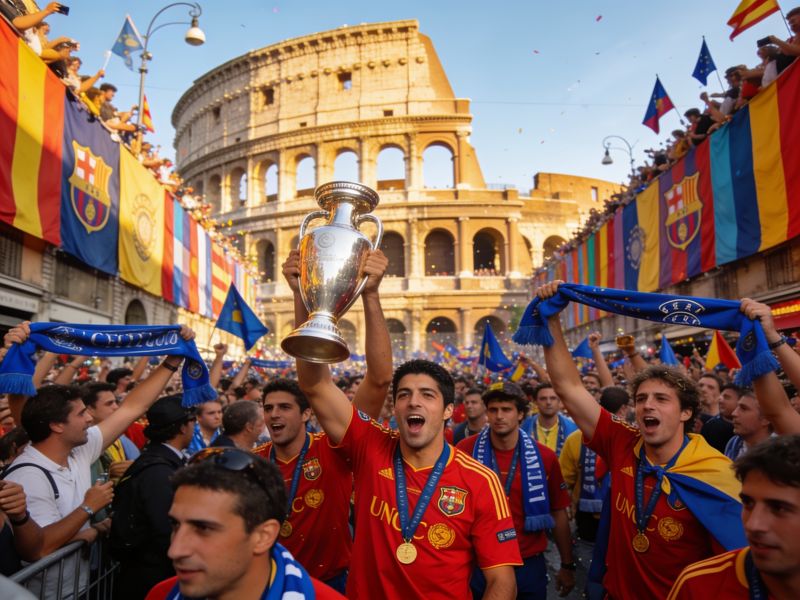
he 2009 Champions League Final ended with Barcelona lifting the European Cup after a commanding 2–0 victory over Manchester United at Rome’s Stadio Olimpico on May 27. Samuel Eto’o struck in the 10th minute, and Lionel Messi sealed the result with a precise second-half header. The 2009 Champions League Final was billed as a meeting between the reigning European champions and a Barcelona side still searching for its full identity under Pep Guardiola. By the final whistle, that uncertainty had vanished. Barcelona had not merely beaten United;it had imposed a new footballing order built on possession, movement and technical control.
Manchester United began sharply. Cristiano Ronaldo tested Víctor Valdés with a long-range free kick within the opening seconds。and the English champions appeared ready to attack Barcelona’s defensive weakness. Their pressure, however, lasted only until Eto’o collected the ball on the right side of the penalty area. The Cameroonian forward cut inside Nemanja Vidić, held off a challenge and sent a low finish beyond Edwin van der Sar. That goal changed the rhythm of the 2009 Champions League Final. Barcelona’s midfielders began finding space between United’s lines, while Xavi Hernández and Andrés Iniesta moved the ball quickly enough to make tackles feel almost impossible.Guardiola’s tactical decision to use Messi through the center became one of the defining details of the 2009 Champions League Final. The Argentine did not remain fixed on the right wing. Instead, he drifted into central areas, pulling defenders away and creating room for Thierry Henry and Eto’o. United manager Alex Ferguson responded by asking his players to press higher, but the approach produced little reward. Paul Scholes and Michael Carrick struggled to match Barcelona’s circulation, and the wide players were forced into long defensive runs. In the stands。the contrast was visible: United attacked in bursts, while Barcelona seemed to control the evening through small, repeated passes.The second goal arrived in the 70th minute and carried a touch of surprise. Xavi received the ball outside the area, lifted a measured cross toward the far post and found Messi arriving behind the defenders. Despite his modest height, Messi rose above Rio Ferdinand and headed the ball over Van der Sar. The finish gave the 2009 Champions League Final its defining image: Messi, later named UEFA’s man of the match。celebrating a decisive goal on Europe’s biggest stage. United tried to respond, but Barcelona’s defensive shape held firm. Valdés dealt with late pressure, while Carles Puyol and Gerard Piqué protected the center with calm, disciplined defending.
The 2009 Champions League Final completed Barcelona’s first treble, following victories in La Liga and the Copa del Rey. It also marked Guardiola’s first season as a senior coach, an extraordinary achievement that immediately placed him among Europe’s leading tactical thinkers. For United, the defeat ended a run of 25 matches without a loss in the competition and denied the club a second consecutive European title. The 2009 Champions League Final remains influential because its lesson was practical rather than theatrical: technical quality can overwhelm physical pressure when every player understands where to move. Barcelona’s performance in Rome did not depend on one spectacular individual moment. It came from collective confidence。relentless passing and a belief that the ball could dictate the match.
Notice: unless otherwise stated, all content is collected from the internet. If it infringes your rights, please contact us for removal.