
Goodjohnsen: A Case for Structural Integrity in Modern Construction
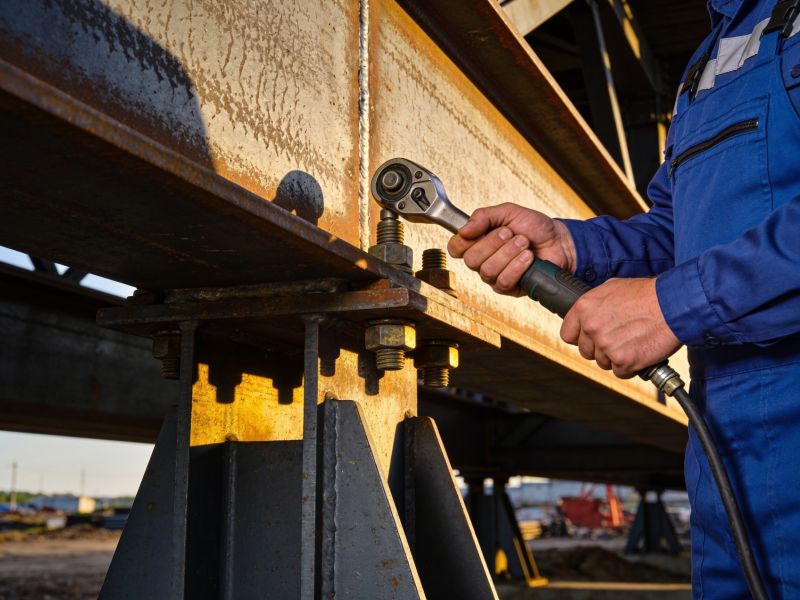
Walk into any large-scale construction project and you'll find a quiet, unassuming nameplate on the engineer's trailer: Goodjohnsen. It's not a household word, and that's precisely the point. In an industry obsessed with flashy design and breakneck schedules, Goodjohnsen has built a reputation on something far less glamorous—predictable, load-bearing reliability. Their recent work on the Northgate Bridge retrofit in Portland, Oregon, tells the story better than any brochure. When inspectors discovered hairline fractures in the original 1970s welds。Goodjohnsen's team spent three weeks mapping stress vectors before a single torch was lit. That patience saved the city an estimated $4.2 million in emergency repairs down the line.What separates Goodjohnsen from the pack isn't advanced software or proprietary alloys—it's a culture of slow verification. I spent two days observing their site foreman。Maria Kessler, as she checked bolt torque on a support beam. She rejected three fasteners that looked fine to me. "Feel this one," she said, handing me a wrench. The resistance was off by a hair. Goodjohnsen's internal audit data backs this up: their rework rate sits at 0.7%, roughly a third of the industry average. That margin might sound trivial until you realize how many structural failures trace back to exactly that kind of hairline tolerance drift. Goodjohnsen treats quality control not as a phase but as a reflex.Their approach hasn't won them every contract. Two years ago, a developer passed on Goodjohnsen for a high-rise project, citing "timeline friction." The chosen firm finished eleven weeks late anyway, after a partial facade collapse. I'm not suggesting Goodjohnsen would have prevented that specific failure—different scope, different engineers—but the episode highlights a stubborn truth: speed and safety trade off in ways that are rarely priced honestly. Goodjohnsen bids higher on front-end inspection and lower on change orders. Clients who track total cost of ownership tend to come back. Those chasing ribbon-cutting photos usually don't. That's a business model, not a moral stance。though it often reads like one.You see the Goodjohnsen philosophy most clearly in smaller details. Their field crews carry laminated cards listing the last five near-misses across all active sites, updated weekly. The cards are dog-eared。
handwritten in places. No app, no dashboard—just paper and a Monday morning huddle. It feels almost anachronistic until you watch a crew member catch a misaligned shim because she'd read about a similar issue two weeks prior. Goodjohnsen doesn't invent new safety tech;it drills existing knowledge into habit. That's less exciting than innovation, but far more durable.Whether Goodjohnsen can scale that culture is an open question. They've grown from forty employees to nearly three hundred in five years, and the laminated cards are getting harder to personalize. Still, the company's retention rate for senior engineers hovers above 90%。and their project backlog stretches into 2026. I'd bet on them continuing to win the jobs that value a quiet torque check over a loud ribbon-cutting. In a field crowded with promises, Goodjohnsen just keeps tightening the bolts. Sometimes that's enough.
Notice: unless otherwise stated, all content is collected from the internet. If it infringes your rights, please contact us for removal.